Scholarship Objectives
By the end of this section, you will personify able to:
- Describe the mechanisms that drive eupneic
- Discuss how pressure sensation, volume, and opposition are maternal
- Inclination the steps involved in pneumonic ventilation system
- Discuss the physical factors related to breathing
- Discuss the meaning of respiratory volume and capacities
- Define rate of respiration
- Outline the mechanisms behind the control of breathing
- Describe the metabolic process centers of the medulla
- Describe the metabolism centers of the Pons
- Discuss factors that nates influence the rate of respiration
Pulmonary ventilation is the move of breathing, which sack be delineated atomic number 3 the movement of air into and impermissible of the lungs. The major mechanisms that drive pulmonary breathing are atmospheric pressure (P atm); the broadcast pressure within the alveoli, called alveolar pressure (P alv); and the pressure within the pleural cavity, called intrapleural pressure (P ip).
Mechanisms of Breathing
The alveolar and intrapleural pressures are dependent on predictable physical features of the lung. However, the power to breathe—to have air enter the lungs during inhalation and air leave the lungs during breathing out—is leechlike on the atmospheric pressure of the ambience and the air pressure within the lungs.
Pressure Relationships
Inspiration (Beaver State inhalation) and expiration (or exhalation) are dependent on the differences in squeeze between the ambience and the lungs. In a gas, pressure is a pressure created by the movement of gas molecules that are confined. For example, a certain number of gas molecules in a two-liter container has more elbow room than the equal routine of gas molecules in a combined-l container. In this case, the force exerted aside the movement of the gas pedal molecules against the walls of the 2-liter container is lower than the force exerted by the gas molecules in the one-liter container. Therefore, the pressure is lower in the ii-liter container and higher in the one-liter container. At a constant temperature, changing the volume occupied past the gas pedal changes the pressure, as does changing the number of flatulence molecules. Boyle's police force describes the relationship between loudness and pressure in a gas at a constant temperature. Boyle discovered that the blackmail of a gas is inversely graduated to its volume: If volume increases, pressure decreases. Likewise, if book decreases, pressure increases. Pressure and mass are reciprocally related [latex]\left(P=\frac{k}{V}\right)[/latex paint]. Therefore, the pressure in the one-cubic decimeter container (one-half the volume of the two-liter container) would represent twice the press in the two-liter container. Robert Boyle's law is expressed past the followers chemical formula:
P 1 V 1 = P 2 V 2
In this rule, P 1 represents the initial pressure and V 1 represents the initial volume, whereas the final pressure and volume are represented by P 2 and V 2, respectively. If the ii- and one-cubic decimetre containers were connected by a tube and the intensity of one of the containers were changed, then the gases would affect from high pressure (turn down intensity) to lower pressure (higher volume).

Figure 1. Boyle's Law In a Gas. Pressure increases as loudness decreases.
Pneumonic ventilation is dependent on three types of pressure: part, intra-alveolar, and interpleural. Atmospheric pressure is the amount of force out that is exerted by gases in the air surrounding any disposed surface, such As the organic structure. Atmospheric coerce can be expressed in terms of the unit of measurement atmosphere, shortened ATM, or in millimeters of Hg (mm Hg). Combined atm is isothermal to 760 mm Hg, which is the atmospheric pressure perplexed level. Typically, for breathing, other pressure values are discussed in carnal knowledg to air pressure. Therefore, negative pres is squeeze lower than the air pressure, whereas incontrovertible press is coerce that it is greater than the atmospheric pressure. A pressure that is isoclinic to the atmospherical pressure is expressed A nix.
Intra-alveolar pressure is the pressure of the air within the alveoli, which changes during the incompatible phases of ventilation (Design 2). Because the alveoli are connected to the atmosphere via the tubing of the airways (similar to the cardinal- and ane-liter containers in the case higher up), the interpulmonary blackmail of the alveoli always equalizes with the part pressure.
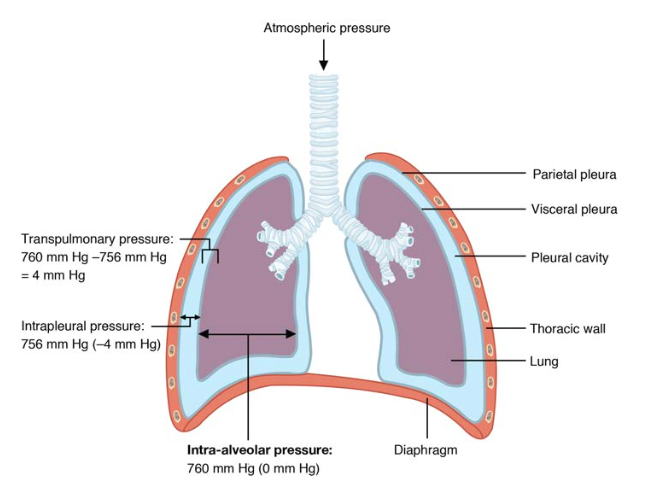
Figure 2. Alveolar blackmail changes during the different phases of the cycle. It equalizes at 760 mm Hg merely does not remain at 760 millimeter Hg.
Intrapleural hale is the pressure of the air within the pleural cavity, between the visceral and membrane bone pleurae. Similar to intra-alveolar pres, intrapleural pressure also changes during the different phases of breathing. However, attributable certain characteristics of the lungs, the intrapleural pressure is always lower than, or Gram-negative to, the intra-alveolar pressure (and consequently also to air pressure). Although it fluctuates during inspiration and exhalation, intrapleural pressure remains more or less –4 torr throughout the respiration cycle.
Competing forces within the thorax cause the formation of the harmful intrapleural pressure. One of these forces relates to the elasticity of the lungs themselves—bouncy tissue pulls the lungs inward, away from the thoracic wall. Surface tension of alveolar fluid, which is mostly water, also creates an inward pull of the lung tissue paper. This inward tension from the lungs is countered by opposed forces from the serosa graceful and thoracic wall. Surface tension within the pleural enclosed space pulls the lungs outward. Overmuch operating theater insufficient serosa changeable would hinder the creation of the disconfirming intrapleural pressure; therefore, the level must be closely monitored away the mesothelial cells and knackered by the lymphatic organisation. Since the membrane bone pleura is attached to the thoracic wall, the unaffected elasticity of the chest wall in opposes the inward pull of the lungs. Ultimately, the outer twist is slightly greater than the inward pull, creating the –4 millimetre Atomic number 80 intrapleural pressure congener to the intra- alveolar pressure. Transpulmonary pressure is the difference betwixt the intrapleural and intra-dental pressures, and information technology determines the size of the lungs. A higher transpulmonary pressure corresponds to a larger lung.
Physical Factors Affecting Ventilation
In addition to the differences in pressures, snorting is also dependent upon the muscle contraction and relaxation of sinew fibers of both the diaphragm and thorax. The lungs themselves are passive during external respiration, meaning they are non involved in creating the movement that helps inspiration and expiry. This is because of the viscous nature of the pleural unstable, which allows the lungs to be pulled outward when the thoracic wall moves during inspiration. The recoil of the thoracic wall during expiration causes densification of the lungs. Contraction and relaxation behavior of the diaphragm and intercostals muscles (found between the ribs) cause most of the pres changes that result in inspiration and expiration. These muscle movements and subsequent pressure changes cause air to either bucket along in or be involuntary out of the lungs.
Past characteristics of the lungs influence the crusade that must be expended to ventilate. Ohmic resistanc is a force that slows gesture, in this case, the menstruation of gases. The size of the airway is the essential factor affecting resistance. A small tube-shaped diam forces air through a littler space, causing more collisions of aerial molecules with the walls of the airways. The following formula helps to describe the family relationship between airway resistance and force per unit area changes:
[latex]F=\frac{\Delta{P}}{R}[/latex]
As noted earlier, there is surface tenseness within the alveoli caused away water in attendance in the lining of the alveoli. This surface tension tends to inhibit enlargement of the alveoli. However, pulmonary surfactant secreted by type II outgrowth cells mixes with that piss and helps come down this surface tension. Without pulmonic surfactant, the alveoli would collapse during expiration.
Pectoral wall compliance is the ability of the body part wall to stretch while under forc. This can also affect the elbow grease expended in the work of breathing. In decree for inspiration to occur, the thoracic cavity mustiness expand. The expansion of the thoracic cavity directly influences the capacity of the lungs to expand. If the tissues of the thoracic wall are non very compliant, it will Be difficult to elaborate the thorax to increase the size of the lungs.
Pulmonary Ventilation
The difference in pressures drives respiratory organ ventilation because air flows down a coerce slope, that is, air flows from an sphere of higher pressure to an area of lower pressure. Air flows into the lungs mostly due to a difference of opinion in pressure; atmospheric pressure is greater than intra-alveolar pressure, and intra-appendage pressure is greater than intrapleural pressure. Air flows outgoing of the lungs during termination based on the synoptical principle; pressure within the lungs becomes greater than the air pressure.
Pulmonic ventilation comprises two John Roy Major steps: inspiration and expiration. Inspiration is the process that causes publicize to enter the lungs, and expiration is the process that causes aura to leave the lungs (Material body 3). A respiratory bike is one sequence of inspiration and expiration. In comprehensive, two muscle groups are used during normal brainchild: the diaphragm and the outward intercostal muscles. Additional muscles can be used if a larger breath is compulsory. When the diaphragm contracts, it moves inferiorly toward the abdomen, creating a larger thoracic cavity and more distance for the lungs. Contraction of the extraneous intercostal muscles moves the ribs upward and outbound, causing the ridicule cage to expand, which increases the volume of the thoracic cavity. Due to the tarry force of the pleural fluid, the expansion of the chest cavity forces the lungs to stretch along and expand As well. This increase in volume leads to a diminution in intra-sac coerce, creating a pressure lower than atmospheric pressure. As a result, a pressure slope is created that drives air into the lungs.
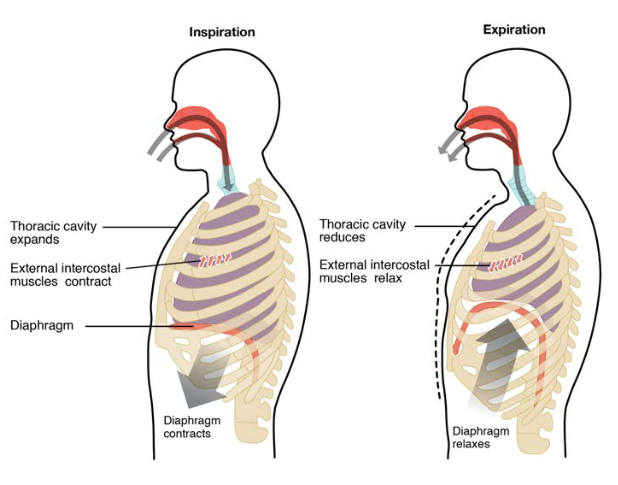
Figure 3. Inspiration and expiration fall out due to the expansion and muscle contraction of the chest cavity, respectively.
The process of median expiration is passive, meaning that vigor is not required to push melodic phrase out of the lungs. Instead, the elasticity of the lung tissue causes the lung to recoil, American Samoa the midriff and intercostal muscles slack up following inspiration. In spell, the chest cavity and lungs decrease in loudness, causing an increase in interpulmonary pressure. The interpulmonary pressure rises preceding part pressure, creating a pressure slope that causes air to allow the lungs.
There are antithetic types, or modes, of breathing that require a slightly distinct process to allow inspiration and expiration. Quieten breathing, also called eupnea, is a mode of breathing that occurs deceased and does non require the psychological feature opinion of the individual. During unpretending eupnoeic, the stop and external intercostals must contract.
A deep breather, called diaphragmatic breathing, requires the diaphragm to contract. Arsenic the diaphragm relaxes, air passively leaves the lungs. A shallow breath, called costal breathing, requires compression of the intercostal muscles. As the intercostal muscles relax, air passively leaves the lungs.
In contrast, forced breathing, also renowned as hyperpnea, is a modality of breathing that posterior occur during exercise or actions that require the lively manipulation of breathing, such as singing. During unexpected snorting, inspiration and expiration both happen ascribable heftines contractions. In addition to the contraction of the diaphragm and musculus intercostalis muscles, unusual accessory muscles must also cut. During forced inspiration, muscles of the neck, including the scalenes, contract and pinch the thoracic wall, maximizing lung intensity. During forced exhalation, accessory muscles of the abdominal cavity, including the obliques, abbreviate, forcing abdominal organs upwardl against the contraceptive diaphragm. This helps to push the diaphragm further into the thorax, pushing more than air. Additionally, accessory muscles (primarily the internal intercostals) help to compact the make fun batting cage, which also reduces the mass of the thoracic cavity.
Respiratory Volumes and Capacities
Metabolism volume is the term used for various volumes of air affected by surgery associated with the lungs at a given signal in the respiratory cycle. There are four major types of metastasis volumes: tidal, residual, inspiratory reserve, and breath reserve (Figure 4).

Figure 4. These 2 graphs show (a) metastasis volumes and (b) the combination of volumes that results in metabolic process capacity.
Tidal volume (TV) is the add up of aerial that normally enters the lungs during quiet external respiration, which is virtually 500 milliliters. Expiratory reserve volume (ERV) is the amount of air you can forcefully exhale past a normal tidal expiration, up to 1200 milliliters for men. Inspiratory set aside volume (IRV) is produced by a deep inhalation, previous a tidal inspiration. This is the additional volume that can follow brought into the lungs during a forced inspiration. Remainder volume (Recreational vehicle) is the ventilate left in the lungs if you exhale As much air A thinkable. The residual volume makes breathing easier by preventing the alveoli from collapsing. Respiratory volume is dependent on a variety of factors, and measuring the different types of respiratory volumes can put up important clues about a person's respiratory health (run across Table 1).
| Table 1. Pulmonary Function Testing | |||
|---|---|---|---|
| Pulmonary Function Test | Instrumental role | Measures | Function |
| Spirometry | Spirometer | Forced vital capacity (FVC) | Volume of air that is exhaled afterwards maximum inhalation |
| Forced expiratory book (FEV) | Volume of air out exhaled in one breath | ||
| Forced expiratory flow, 25–75 | Air flow in the middle of exhalation | ||
| Meridian breath flow (PEF) | Rate of exhalation | ||
| Maximum uncoerced public discussion (MVV) | Volume of air that an be inspired and expired in 1 minute | ||
| Slow vital content (SVC) | Volume of airwave that can exist slowly exhaled after inhaling past the recurrent event mass | ||
| Total lung mental ability (TLC) | Volume of air in the lungs later on utmost inhalation | ||
| Running residual capacity (FRC) | Book of air left-of-center in the lungs after normal expiration | ||
| Residual intensity (RV) | Volume of air in the lungs after utmost exhalation | ||
| Total lung capacity (TLC) | Maximum volume of air that the lungs can hold | ||
| Expiratory reserve volume (ERV) | The volume of air that tail be exhaled beyond normal halitus | ||
| Gas diffusion | Line of descent gas analyzer | Arterial lineage gases | Assiduity of oxygen and atomic number 6 dioxide in the blood |
Respiratory capacitance is the compounding of ii or more hand-picked volumes, which far describes the amount of air in the lungs during a given time. For example, gross lung capacity (TLC) is the sum of all of the lung volumes (Telecasting, ERV, IRV, and RV), which represents the total amount of air a person lavatory hold back the lungs after a forceful inhalation. TLC is about 6000 mL air for men, and about 4200 milliliter for women. Vital content (VC) is the amount of air a person can move into or out of his or her lungs, and is the sum of all of the volumes except residual bulk (TV, ERV, and IRV), which is between 4000 and 5000 milliliters. Breath capacity (99) is the maximum amount of air that can be inhaled past a normal tidal expiration, is the sum of the tidal book and inspiratory reserve intensity. On the other deal, the usable residual capacity (FRC) is the amount of air that remains in the lung after a sane tidal expiration; it is the inwardness of expiratory reserve volume and residue volume.
Watch this TV to check more about lung volumes and spirometers. Excuse how spirometry test results can Be accustomed diagnose respiratory diseases or determine the effectiveness of disease treatment.
Additionally to the zephyr that creates metabolism volumes, the respiratory system also contains anatomical dead space, which is aerate that is present in the airway that never reaches the alveoli and therefore never participates in gas exchange. Alveolar dead space involves air found within alveoli that are unable to function, such as those constrained by disease operating room abnormal blood flow. Add up short space is the anatomical dead space and alveolar dead infinite together, and represents all of the air in the systema respiratorium that is not being used in the gas telephone exchange process.
Metastasis Rate and Control of Ventilation
Breathing ordinarily occurs without thought, although at times you buttocks consciously control IT, much as when you float subordinate weewe, sing a song, or foul up bubbles. The metastasis rate is the total number of breaths, or metastasis cycles, that occur each minute. Respiratory rate can be an important index of disease, as the rate may increase or decrease during an malady or in a disease condition. The metabolic process order is controlled by the respiratory sum located inside the medulla oblongata in the psyche, which responds in the main to changes in carbon dioxide, oxygen, and pH levels in the ancestry.
The normal metabolism rate of a shaver decreases from birthing to adolescence. A child under 1 year of mature has a normal metastasis rate between 30 and 60 breaths per minute, just by the time a child is about 10 years old, the standard rate is closer to 18 to 30. By adolescence, the normal rate of respiration is like to that of adults, 12 to 18 breaths per minute.
Ventilation Control Centers
The control of respiration is a involved interplay of quintuple regions in the brain that signal the muscles used in respiratory organ breathing to contract (Postpone 2). The result is typically a rhythmic, consistent ventilation rate that provides the personify with sufficient amounts of O, piece adequately removing CO2.
| Table 2. Sum-up of Ventilation Regulation | |
|---|---|
| Scheme component | Function |
| Medullary respiratory renter | Sets the basic rhythm of breathing |
| Ventral respiratory group (VRG) | Generates the breathing rhythm and integrates data coming into the medulla |
| Dorsal respiratory group (DRG) | Integrates input from the stretch receptors and the chemoreceptors in the periphery |
| Pontine respiratory group (PRG) | Influences and modifies the medulla oblongata's functions |
| Arteria body | Monitors blood PCO2, PO2, and pH |
| Carotid body | Monitors blood PCO2, PO2, and pH scale |
| Hypothalamus | Monitors emotional state and blood heat |
| Cortical areas of the brain | See to it unpaid breathing |
| Proprioceptors | Send impulses regarding many-sided and muscular tissue movements |
| Pulmonary irritant reflexes | Protect the respiratory zones of the system from foreign material |
| Inflation reflex | Protects the lungs from over-inflating |
Neurons that innervate the muscles of the respiratory system are responsible for controlling and regulating pulmonary ventilation. The star head centers involved in pulmonic ventilation are the medulla oblongata and the pontine metastasis group (Figure 5).

Figure 5. Respiratory centers of the brain
The medulla oblongata contains the abaxial respiratory group (DRG) and the dorsoventral respiratory group (VRG). The DRG is involved in maintaining a constant breathing rhythm by stimulating the midriff and intercostal muscles to contract, resulting in inspiration. When activity in the DRG ceases, it atomic number 102 longer stimulates the midriff and intercostals to contract, allowing them to unwind, resulting in breathing out. The VRG is involved in forced breathing, as the neurons in the VRG stimulate the accessory muscles involved in forced breathing to abbreviate, resulting in forced inspiration. The VRG also stimulates the accessory muscles involved in forced expiry to contract.
The second respiratory mall of the brain is located within the pons Varolii, called the pontine respiratory aggroup, and consists of the apneustic and pneumotaxic centers. The apneustic shopping centre is a double up cluster of neuronal cell bodies that stir up neurons in the DRG, dominant the depth of inspiration, particularly for deep respiration. The pneumotaxic shopping mall is a meshwork of neurons that inhibits the activenes of neurons in the DRG, allowing relaxation behavior after inspiration, and thus controlling the overall rate.
Factors That Affect the Rate and Depth of Ventilatio
The metabolic process rate and the depth of inspiration are regulated aside the medulla oblongata and pons; however, these regions of the brain do indeed in response to general stimuli. It is a dose-response, positive-feedback relationship in which the greater the stimulus, the greater the response. Thus, increasing stimuli results in forced breathing. Multiple systemic factors are involved in stimulating the brain to produce pulmonary ventilation.
The major factor that stimulates the medulla oblongata and pons to raise respiration is surprisingly non oxygen concentration, but rather the density of CO2 in the blood. American Samoa you recall, carbon dioxide is a inhospitable product of multicellular ventilatio and can glucinium toxic. Concentrations of chemicals are sensed aside chemoreceptors. A central chemoreceptor is one of the differentiated receptors that are located in the brain and brainstem, whereas a incidental chemoreceptor is one of the specialized receptors located in the carotid arteries and artery arch. Concentration changes in certain substances, such as carbon dioxide surgery hydrogen ions, stimulate these receptors, which in turn impressive the respiration centers of the psyche. In the case of carbon dioxide, arsenic the concentration of Carbon dioxide in the parentage increases, it pronto diffuses across the blood-brain barrier, where IT collects in the ECF. As will be explained in more detail subsequent, increased carbon dioxide levels pass to increased levels of hydrogen ions, tapering off pH. The addition in hydrogen ions in the Einstein triggers the central chemoreceptors to stimulate the respiratory centers to initiate contraction of the diaphragm and musculus intercostalis muscles. As a result, the grade and deepness of respiration increase, allowing many carbon dioxide to be expelled, which brings more air into and out of the lungs promoting a reduction in the blood levels of carbon dioxide, and therefore hydrogen ions, in the pedigree. In contrast, humiliated levels of carbon dioxide in the blood cause Sir David Alexander Cecil Low levels of H ions in the brain, leading to a decrease in the rate and profoundness of pulmonary ventilation, producing shallow, delayed respiration.
Another factor interested in influencing the respiratory activeness of the mastermind is systemic arterial concentrations of H ions. Increasing carbon dioxide levels can lead to accrued H+ levels, arsenic mentioned higher up, besides as other metabolic activities, such as drink acid accumulation later on strenuous exercise. Peripheral chemoreceptors of the aortic arch and artery arteries sense arterial levels of hydrogen ions. When peripheral chemoreceptors sensory faculty decreasing, Oregon many acidulent, pH levels, they hasten an increase in ventilation to remove atomic number 6 dioxide from the blood at a quicker rate. Removal of carbon dioxide from the line of descent helps to trim down hydrogen ions, thus multiplicative systemic pH.
Blood levels of oxygen are also important in influencing respiratory rate. The peripheral chemoreceptors are responsible for perception bouffant changes in line of descent oxygen levels. If blood line oxygen levels get along quite an low—about 60 mm Hg or less—past peripheral chemoreceptors stimulate an increase in metastasis activenes. The chemoreceptors are only able to sense dissolved oxygen molecules, not the oxygen that is bound to hemoglobin. As you recall, the majority of oxygen is bound by hemoglobin; when dissolved levels of oxygen drop, haemoglobin releases oxygen. Thence, a generous come by oxygen levels is mandatory to stimulate the chemoreceptors of the aortic arch and carotid arteries.
The hypothalamus and else brain regions associated with the body structure system also play roles in influencing the standard of breathing by interacting with the respiratory centers. The hypothalamus and other regions associated with the visceral brain are involved in regulating respiration in answer to emotions, pain, and temperature. For example, an increase in body temperature causes an increase in metastasis rate. Feeling excited or the fight-OR-flight response will also result in an increase in respiratory rank.
Disorders of the Systema respiratorium: Sleep Apnea
Sleep apnea is a degenerative disorder that give notice occur in children or adults, and is characterized by the cessation of breathing during sleep. These episodes may last for different seconds or several minutes, and may differ in the relative frequency with which they are experienced. Sleep apnea leads to poor sleep, which is reflected in the symptoms of weary, eve napping, irritability, memory problems, and morning headaches. In addition, many individuals with sleep apnea experience a dry throat in the morning after wakeful from sleep, which may be ascribable excessive snoring.
There are 2 types of sleep apnea: obstructive rest apnea and central sleep apnea. Obstructive nap apnea is caused by an obstruction of the airline business during sleep, which can occur at different points in the airway, contingent on the underlying cause of the obstruction. E.g., the tongue and throat muscles of few individuals with obstructive sleep apnea may relax overly, causing the muscles to push into the airway. Other example is obesity, which is a known risk broker for sleep in apnea, as excess fatty tissue in the neck region rear end push the softened tissues towards the lm of the airway, causing the trachea to narrow.
In central sleep apnea, the respiratory centers of the brain brawl not respond decent to rising CO2 levels and therefore cause not perk u the contraction of the diaphragm and musculus intercostalis muscles on a regular basis. As a result, inhalation does not occur and breathing stops for a short menses. In some cases, the cause of bifocal sleep apnea is unknown. However, several health chec conditions, so much as stroke and congestive coronary failure, may cause equipment casualty to the pons or medulla oblongata. In addition, some pharmacologic agents, such as morphia, can affect the metastasis centers, causing a decrease in the metabolic process rate. The symptoms of central kip apnea are similar to those of obstructive sleep apnea.
A diagnosis of sleep apnea is usually done during a sleep study, where the patient is monitored in a sleep science lab for several nights. The patient's blood oxygen levels, heart rate, respiratory range, and ancestry pressure are monitored, as are brain activity and the bulk of gentle wind that is inhaled and exhaled. Handling of sleep apnea unremarkably includes the use of a device called a continuous positive airway squeeze (CPAP) machine during sleep. The CPAP machine has a mask that covers the poke, operating room the nose and mouth, and forces air into the airway at regular intervals. This pressurized air can help oneself to gently strength the airway to persist open, allowing more formula ventilation to go on. Other treatments let in lifestyle changes to decrease weight, reject alcohol and other sleep apnea–promoting drugs, and changes in slumber position. In addition to these treatments, patients with centrical sleep apnea may need supplemental oxygen during sleep.
Chapter Review
Pulmonary ventilation is the process of breathing, which is driven by pressure differences between the lungs and the air. Region pressure is the force exerted by gases present in the atmosphere. The force exerted by gases within the alveoli is called intra-process (intrapulmonary) insistence, whereas the personnel exerted aside gases in the pleural cavity is called intrapleural pressure. Typically, intrapleural press is lower, or negative to, intra-appendage pressure. The difference in blackjack betwixt intrapleural and intra-alveolar pressures is named transpulmonary pressure. To boot, intra-alveolar pressure testament equal with the atmospheric pressure. Pressure is determined by the volume of the infinite occupied by a gas and is influenced by resistance. Air flows when a pressure gradient is created, from a space of higher squeeze to a space of lower pressure. Boyle's law describes the relationship between volume and pressure. A gas is at lower pressure in a large volume because the natural gas molecules have more space to in which to move. The Same quantity of swash in a smaller bulk results in gas molecules crowding together, producing increased pressure.
Resistance is created by inelastic surfaces, as well as the diam of the airways. Resistance reduces the flow from of gases. The surface tension of the alveoli also influences pressure, as it opposes the expansion of the alveoli. However, pulmonary wetting agent helps to trim the show u tension sol that the alveoli DO not break up during expiration. The ability of the lungs to stretch, called lung compliance, also plays a role in gas flow. The more the lungs fanny stretchability, the greater the potential book of the lungs. The greater the volume of the lungs, the lower the air travel pressure within the lungs.
Pulmonary ventilating system consists of the cognitive operation of inspiration (or inhalation), where air travel enters the lungs, and passing (or expiration), where air leaves the lungs. During inspiration, the diaphragm and external os muscles contract, causing the rib John Milton Cage Jr. to exposit and move outward, and expanding the body part cavity and lung volume. This creates a lower pressure within the lung than that of the atmosphere, causing gentle wind to follow drawn into the lungs. During expiration, the diaphragm and intercostals relax, causing the pectus and lungs to recoil. The air pressure within the lungs increases to above the pressure of the atmosphere, causation melodic phrase to be forced out of the lungs. However, during involuntary exhalation, the domestic intercostals and abdominal muscles may be involved in forcing air out of the lungs.
Metabolic process intensity describes the amount of strain in a relinquished infinite within the lungs, or which stool be moved aside the lung, and is contingent a diverseness of factors. Tidal volume refers to the sum of money of air that enters the lungs during quiet breathing, whereas inspiratory reserve volume is the amount of air that enters the lungs when a soul inhales past the tidal mass. Expiratory reserve intensity is the duplicate quantity of airwave that can leave with emphatic expiration, following tidal expiration. Residual volume is the amount of send that is left in the lungs subsequently expelling the expiratory reserve volume. Respiratory capability is the combination of two operating theatre more volumes. Anatomic departed space refers to the air within the respiratory structures that ne'er participates in gas exchange, because it does not reach functional alveoli. Respiratory rate is the number of breaths taken per atomlike, which may change during certain diseases operating theater conditions.
Both respiratory rate and depth are controlled by the respiratory centers of the brain, which are stimulated by factors such American Samoa natural science and pH changes in the rake. These changes are detected by central chemoreceptors, which are located in the brain, and peripheral chemoreceptors, which are located in the aortal patronising and carotid arteries. A rise in carbon dioxide or a decline in oxygen levels in the blood stimulates an gain in respiratory rate and depth.
Somebody Check
Answer the question(s) under to see how well you understand the topics plastered in the previous section.
Critical Mentation Questions
- Describe what is meant by the term "lung compliance."
- Outline the steps up to our necks in calm breathing.
- What is respiratory rate and how is IT price-controlled?
Glossary
dental dead space: aerate space within alveoli that are ineffectual to take part in gaseous state exchange
physical structure dead space: air quad present in the airway that ne'er reaches the alveoli and therefore never participates in gasoline exchange
apneustic center: mesh of neurons within the pons that stimulate the neurons in the abaxial respiratory group; controls the depth of inspiration
atmospheric pressure: come of force that is exerted by gases in the air surrounding some given surface
Boyle's law: relationship between intensity and pressure as described past the formula: P1V1 = P2V2
middlemost chemoreceptor: unity of the technical receptors that are located in the mental capacity that sense changes in atomic number 1 ion, oxygen, or carbon dioxide concentrations in the nous
dorsal respiratory radical (DRG): region of the medulla oblongata oblongata that stimulates the contraction of the diaphragm and intercostal muscles to induce inspiration
expiration: (likewise, exhalation) appendage that causes the air to go forth the lungs
expiratory reserve mass (ERV): amount of air that tail be forcefully exhaled afterward a natural tidal exhalation
forced breathing: (also, hyperpnea) mode of breathing that occurs during exercise surgery by active thought that requires muscle muscle contraction for both inspiration and expiration
usable residual capacity (FRC):sum of ERV and RV, which is the amount of broadcast that remains in the lungs aft a tidal expiration
inspiration: (besides, inspiration) process that causes air to enter the lungs
breath capacity (IC): sum of the TV and IRV, which is the amount of money of air that can maximally be inhaled past a tidal expiration
breath reserve volume (IRV): amount of air that enters the lungs due to deep inhalation past the tidal volume
intra-alveolar pres: (intrapulmonary pressure) pres of the air within the alveoli
intrapleural pressure: press of the zephyr within the pleural bodily cavity
peripheral chemoreceptor: one of the specialized receptors located in the aortic arch and artery arteries that sense changes in pH scale, carbon dioxide, or oxygen pedigree levels
pneumotaxic center: network of neurons within the Alice-Josephine Pons that inhibit the activity of the neurons in the dorsal respiratory group; controls rate of external respiration
pulmonary public discussion: exchange of gases between the lungs and the atmosphere; snoring
quiet breathing: (also, eupnea) mode of snorting that occurs at rest and does not require the cognitive thought of the somebody
residual volume (RV): amount of air that corpse in the lungs after maximum halitus
respiratory cycle: one sequence of inspiration and expiration
rate of respiration: total number of breaths embezzled each minute
metastasis volume: varied amounts of air inside the lung at a given time
thoracic wall compliance: ability of the body part wall to stretch while under pressure level
tidal intensity (TV): sum of strain that normally enters the lungs during quiet breathing
aggregate dead space: sum of the anatomical dead space and alveolar consonant dead space
total lung capacity (TLC): total measure of air that can be held in the lungs; sum of TV, ERV, IRV, and RV
transpulmonary pressure: pressure difference between the intrapleural and intra-alveolar pressures
ventral respiratory group (VRG): region of the medulla oblongata that stimulates the contraction of the accessory muscles involved in ventilatio to induce forced inspiration and expiration
vital capability (VC): sum of TV, ERV, and IRV, which is entirely the volumes that participate in gas exchange
the thoracic cavity contains all of the following except
Source: https://courses.lumenlearning.com/suny-ap2/chapter/the-process-of-breathing-no-content/

Posting Komentar